5 Long-Term Benefits of Telehealth
Wednesday, June 22, 2022 @ 10:00 AM EDT

Virtual care became a go-to for providers and patients during the COVID-19 pandemic. As time has passed, the benefits of telehealth have only become more apparent.
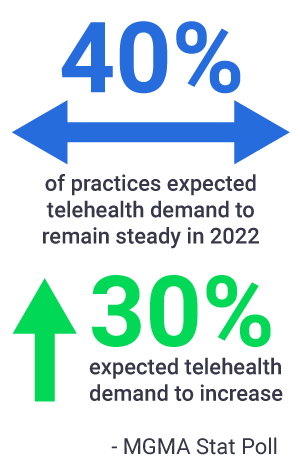
An Oct. 29, 2021, MGMA Stat poll found that 40% of practices expected telehealth demand to remain steady in 2022, while 30% expected demand to increase.
Has your practice formed a plan to use telehealth to improve patient care — and revenue? Read on for five advantages of telehealth in the long term:
1. Convenient access to care is a top benefit of telehealth
By offering virtual appointments patients can fit into their schedules, practices can improve access to treatment – and offer care for greater numbers of patients. Practices can also encourage telehealth appointments for preventative care, which have long-term health advantages.
Telehealth can provide a means to overcome healthcare disparities affecting underserved populations. Patients in rural areas have challenges in receiving care, such as greater travel times to healthcare institutions and a shortage of specialists. With telehealth, however, practices can ensure these patients have access to care.
There are telehealth benefits for elderly patients, too. Using telehealth, these patients can obtain care from the comfort of their own homes, without having to travel or risk contracting COVID-19 or other illnesses.
Practices can profit from increasing patient volume and revenue as they focus on providing care to more patients and expanding access to new groups.
2. More effective management of chronic conditions
Along with patient engagement solutions, telehealth can play a key role in remote care management programs for patients with chronic conditions. Providers can manage care for patients who are at a higher risk of serious disease from COVID-19 using telehealth consultations.
By participating in the Chronic Care Management (CCM) program developed by the Centers for Medicare & Medicaid Services (CMS), your practice can tap into new revenue streams — a significant benefit of telehealth, in addition to improved patient outcomes.
If you are interested in getting started with Chronic Care Management, find out how Greenway Care Coordination Services can help.
3. Improved patient engagement and health outcomes
Patients with chronic conditions are not the only ones who could benefit from improved outcomes because of telehealth. To promote patients’ involvement in their treatment, incorporate virtual visits into your practice’s patient engagement strategy.
Having patients fill out forms on the patient portal prior to their virtual visit is one way to introduce them to the portal and prompt them to create or access their account. Patients can use this to access resources, instructional materials, test results, appointment scheduling, and more through the portal.
Additionally, you can leverage patient messaging to send reminders for upcoming telehealth visits and any information needed to set expectations beforehand. After the visit, patient messaging can help you follow up with patients and remind them to schedule another appointment, if needed.
Through telehealth, your practice can ensure care continuity and avoid gaps in between consultations.

4. Better patient experiences
Telehealth also eliminates the potential of COVID-19 exposure that comes with in-person encounters. Amid the pandemic, practices used telehealth to reduce waiting room volume for better social distancing.
Patients who need in-person care will have greater satisfaction if their provider’s office is not overcrowded, and those who can benefit from virtual visits will appreciate the time savings and convenience of not having to travel to their appointment.
5. Increased practice efficiency — and revenue
Telehealth has the potential to increase efficiency and cash flow. For instance, your practice could add telehealth appointments outside your current office hours to expand your billable time, while reducing overhead such as exam rooms or staff needed during these extended hours.
Another benefit of telehealth is the reduction of revenue lost due to no-shows, particularly those caused by mobility concerns. Because telehealth visits allow for remote care, unexpected car troubles or traffic will not hinder your patients from receiving the care they require.
Some practices have staggered appointments on providers’ schedules to reduce the number of patients in the office at one time. Practices can cover the gaps between in-person appointments with virtual ones to make up for the difference in patient volume and maintain revenue.
Looking to access these benefits of telehealth in the long term? Greenway Telehealth™, our virtual care solution, is designed with the provider and patient in mind. With an easy-to-use interface, you can provide care remotely, increase engagement, and improve workflow efficiency with this safe, HIPAA-compliant telehealth system.